
Plato and Christian Personalism
by D.T. Sheffler
This groundbreaking study challenges a scholarly impasse that has persisted for generations. Personalist philosophers have criticized Plato for allegedly devaluing the individual person, while Platonic scholars have confined their subject to the archives of ancient history. D.T. Sheffler reveals that both traditions have missed something crucial: Plato’s philosophy offers unexpected resources for understanding personalist commitments.
Sheffler demonstrates that Plato’s revolutionary insights about the soul—its transcendence, its dignity, its capacity for self-knowledge—established philosophical foundations that resonate deeply with later Christian personalism. Far from reducing persons to abstract ideas, Plato articulated what makes each human soul irreducibly unique and infinitely valuable in ways that anticipate central personalist concerns.
Drawing on careful textual analysis and engaging particularly with Dietrich von Hildebrand’s phenomenological personalism, this book reveals surprising points of contact and mutual enrichment between ancient Athens and contemporary philosophy. Sheffler shows how Plato’s understanding of consciousness, moral agency, and human dignity addresses questions that remain central to personalist thought.
Philosophical contemplation (theoria), as Plato, Hildebrand, and Sheffler conceive it, is not merely a way of life, but is an initiation into a divine way of life.
Mark K. Spencer
D.T. Sheffler is a professor of philosophy and academic dean at Memoria College, and an Associated Scholar at the Hildebrand Project. His research and writing focus on Christian Platonism, early Christianity, and beauty.


Download the Book Flyer

Reviews & Commentary
From scholars and readers
Let me begin by stating the obvious: In tracing the movement of Christian personalism into one of its ancient Greek precursors, into the founder of the Academy and the philosophical bridge between Socrates and Aristotle, D.T. Sheffler has filled a much-needed lacuna in personalist scholarship. In then providing such a well-grounded historical study that unveils the remote roots of Christian personalism in Platonic thought, and therefore also in the Greek philosophical tradition more broadly, Sheffler has drawn forth and emphasized certain seminal ideas central to the movement of Christian personalism and revealed their rightful provenance in the pre-Christian era.

Robert McNamara
in Phenomenological ReviewsSheffler writes with clarity, philosophical seriousness, and a genuine love for both traditions he is bringing into conversation. He is, as Mark Spencer notes in the foreword, “a fair-minded reader of all his source texts” who “readily grants when a personalist (or other) criticism of Plato is correct” while also showing “how, surprisingly, even those criticisms of Plato are generally rooted in a Platonic insight, which Plato himself just failed to adequately develop” (p. xiv). That combination of generosity and rigor is rare, and it makes Plato and Christian Personalism a model of how the history of philosophy ought to be done. Alfred North Whitehead’s famous remark that the European philosophical tradition is “a series of footnotes to Plato” is quoted at the book’s close. Sheffler has written a footnote that illuminates the original text rather than obscuring it, and in doing so has rendered a genuine service to both the Platonic and the personalist traditions.
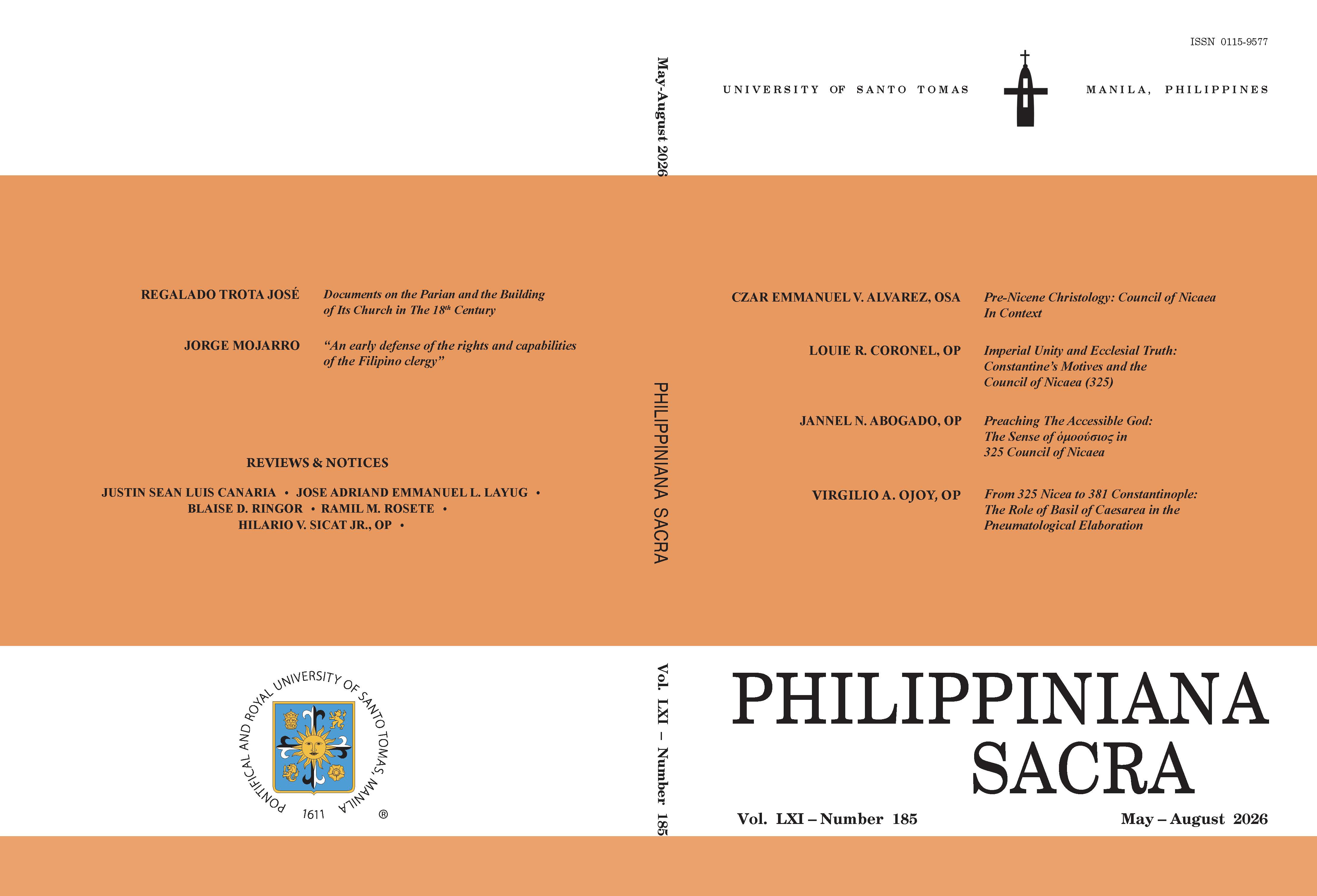
Blaise D. Ringor
in Philippiniana SacraThe author has performed a valuable service in bringing Plato and Christian personalism into sustained conversation. The author is at his strongest in his readings of Hildebrand and in his exposition of Hildebrand’s affinity for Platonism (see especially pp. 116–127). In many respects, the central contribution of the volume is that it renders it possible to read Hildebrand as a Platonist without thereby dismissing Plato as anti-personalist. […]
The opening chapter provides a helpful summary of personalism and the key Catholic figures whose views fall under this term. Engagement with volumes of this kind will expand the homiletic imagination of the preacher.

Fr. M. Ross Romero, S.J.
in Homiletic & Pastoral ReviewSheffler makes a very strong case for his position, and this text is rigorously argued. There are, however, at least two ways in which I think Sheffler might have further developed this thesis. […]
But a consideration of Platonic personalist theism and the dialogue form would only strengthen Sheffler’s already very ably defended claim that Plato inaugurates a tradition that most certainly has personalism as one of its direct offspring. This makes his book of great interest not just to Plato scholars and personalist philosophers, but also phenomenologists concerned with the irreducible standpoint of first-person experience.

Bruce Gilbert
in SymposiumSo I set out to read closely what Plato actually has to say about the self and personhood, and I found that in almost every case the disparaging remarks were either wholly untrue or they required so much more nuance and qualification that they were very misleading. This led me to the argument of the present book: that Plato should be read as a positive source of inspiration for Christian personalism.
This obviously doesn’t mean that everything we find in Christian Platonism is already in Plato or that there is nothing in Plato to which a Christian would object. But it does mean that the Christian tradition owes a significant debt on these subjects to the Platonic school of thought far more than to the Stoics, the Epicureans, or even the Aristotelians.
Online Reading Groups Return in 2026
Subscribe to be notified!
Organize a Local Reading Group
Request more Information