Reading group beginning May 11
Personalist Essay Contest
Papers due July 1.
Deadline to Apply
July 1, 2023
Location
The 2023 ACPA conference will be held in Houston, TX.
The Hildebrand Project invites graduate students to submit an essay on any theme in the work of personalists Dietrich von Hildebrand, Max Scheler, or Edith Stein, to be presented at the 2023 ACPA annual meeting in Houston (November 16-19).
Submission Guidelines
- Essays should be prepared for blind review and e-mailed to Dr. Mark Spencer at spen8444@stthomas.edu.
- Essays should be approximately 20 minutes of reading time.
- Essays will be judged by a committee of senior personalist scholars.
- Essays must be submitted by July 1, 2023.
Three winners will be selected
- Winners will be awarded $600 to cover travel, lodging, and other expenses to attend the 2023 ACPA.
- Winners will present their papers at the Hildebrand Project’s 2023 ACPA satellite session and responses will be given by senior personalist scholars.
- For questions or more information, please email the Hildebrand Project at (info@hildebrandproject.org)or Dr. Mark Spencer (spen8444@stthomas.edu)
The flyer for this event can be downloaded here (PDF).

Transformation in Christ
Reading Group beginning April 5
The Soul of a Lion
Reading Group beginning April 12
Aesthetics Vol. I
Reading Group beginning April 13
Dr. Robert E. Wood Tribute

By Christopher T. Haley
Student of Dr. Wood and Vice President of the Hildbrand Project.
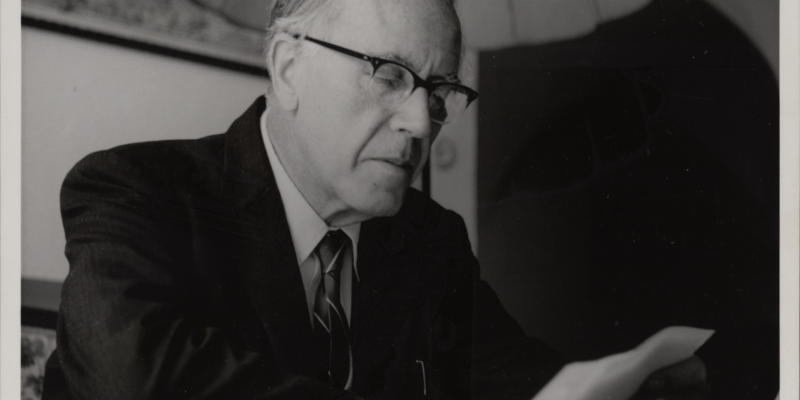
The Hildebrand Project mourns the passing of Dr. Robert E. Wood (October 20, 1934 – February 10, 2023). Dr. Wood was a longtime friend and colleague of Hildebrand Project co-founder Dr. John F. Crosby and he was my teacher at the University of Dallas. Indeed, it was Dr. Wood who suggested I seek out the Hildebrand Project nearly a dozen years ago—little did I know (though I believe he knew) that he was setting me on my life’s course.
Dr. Wood was a Renaissance man, a scholar, an athlete, a sculptor, and a philosopher in the Platonic sense: a musical man of ordered harmony. He wrote on all the great philosophers, but he had a special love for Plato. I still recall coming into his office one day to find him reading Plato’s Meno, a text he must have read dozens of times and certainly didn’t need to re-read. He wasn’t teaching the book anytime soon or writing on it; he was just enjoying it. Dr. Wood always said: “There is no reading; only re-reading.” Despite his prolific output and many accolades (you may read his obituary here), he was always a student; and to be his student was to be a student with him, to join him on a journey through great ideas and the untold beauty of the world. He was a Virgil to his students.
We called him “the maestro” on account of the way he would conduct his classes. He held whole philosophical systems in his repertoire, and could bring them to vision before your eyes and mind. Whatever he taught, he wanted to convey its beauty. He was like St. Thomas in always giving every position its most charitable and compelling account. That intellectual charity is one of the most important lessons I learned from him. Try as I might to dismiss a thinker (usually Hume), he would urge me to understand why we read this and to find what is best and important (even in Hume!).
He showed this same charity to his students too, finding what was best in their work and in them as persons. I once wrote a paper on Kant; I received it back with a “B” and a comment that it was a good paper on Plato! He was as interested in my love for poetry and my family as he was in my pursuit of philosophical studies. At the heart of Dr. Wood’s interest was the core of the person, the “inner heart,” as he used to say. The influence of Dietrich von Hildebrand is evident; and, while I never studied Hildebrand with Dr. Wood, he would often refer to The Heart and Liturgy and Personality as being two of the most important books in his philosophical formation.
It was thus a personal and professional joy for me to invite him to author an introduction to Hildebrand’s Aesthetics, and to host him as a speaker for our 2017 summer seminar on Retrieving Beauty (the videos are available here). His last publication, just a month before he died, was Being Human: Philosophical Anthropology through Phenomenology and he was still at work on his last book, fittingly, a book on the heart.
A friend, a mentor, a student, and a scholar; a family man, a faithful man, and a gentleman; we have lost a truly great person and a refulgent personality in Dr. Wood. His legacy lives on in his beautiful family, his myriad students, his enduring impact on Catholic philosophy, the University of Dallas community, and, in some small way, in the Hildebrand Project.
Dr. Wood thought we should all sing more, particularly at the end of events and gatherings. I thus invite you to join us in your hearts in singing:
Salve, Regina, Mater misericordiæ,
vita, dulcedo, et spes nostra, salve.
Ad te clamamus exsules filii Hevæ,
Ad te suspiramus, gementes et flentes
in hac lacrimarum valle.
Eia, ergo, advocata nostra, illos tuos
misericordes oculos ad nos converte;
Et Jesum, benedictum fructum ventris tui,
nobis post hoc exsilium ostende.
O clemens, O pia, O dulcis Virgo Maria.
Ora pro nobis, sancta Dei Genitrix,
Ut digni efficiamur promissionibus Christi.